My Dear Robins,
I love you. I really do. Some people think that robins are too ordinary to be of much interest, but I am not counted among those souls. Anyone looking at my blog for long will realize that I love birds and looking through my photos, they will find several very flattering shots of robins. But I really must point out a few problem areas where we are just not seeing eye to eye on things.
Do you see this photograph?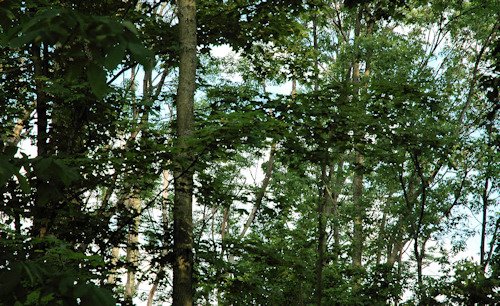 This photograph, taken only moments ago, depicts the woods which surround the environment in which we all live here. Woods which are full of trees, trees being the supposed perfect place for robins to build nests. For your edification, I am enclosing a list which includes places that the management hereabouts considers to be poor nest site choices. On the list [attached, see addendum 1] are such places as on the tops of ladders that someone leaves leaning against a building whilst they go inside for lunch, doorways under which there is a a high rate of traffic which causes you to get all wigged out and flap around the heads of said traffic, squawking your fool heads off, like we want your funny looking babies anyway, and on top of the wood pile that is still being constructed, which trust me, makes it a particularly bad place to try and raise a family.
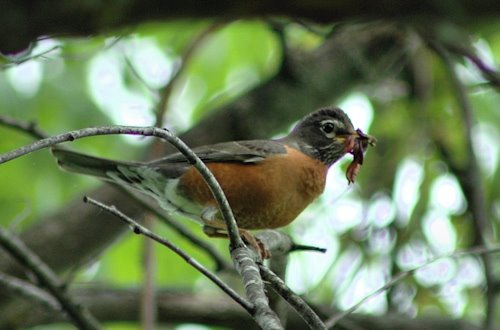
Now, please turn your attention to this photo.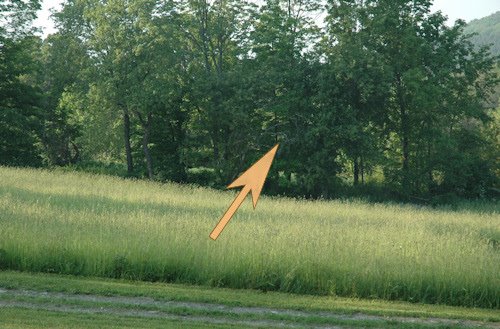 This photo is also of some of the many trees available for nest making in our immediate vicinity and the arrow demonstrates that at least one pair of robins understands where a nest ought to be built, since it indicates the location of their very own nest. Here is the father robin now, waiting for me to go away, so that he can go and feed this yummy and nutritious worm to his babies.
 And with the exception of an occasional photographer zipping by very quickly to get a few pics, they are far away from people and very safe.
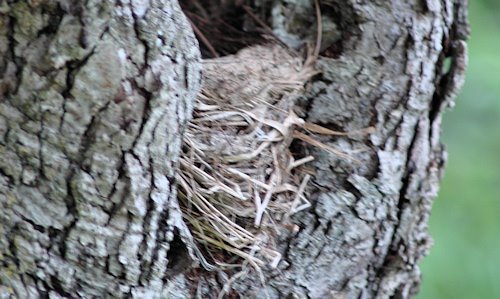
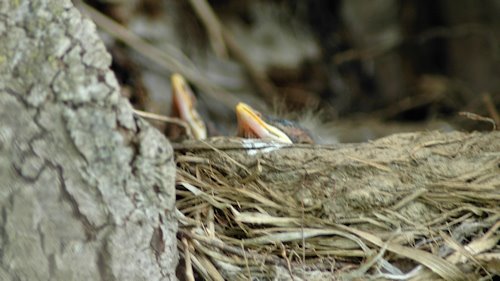 You might also wish to observe this photograph, of the nest construction [which I took as I ran by the nest so as not to disturb the babies therein]. It appears to be made of all natural indigenous materials such as mud, sticks and grass.
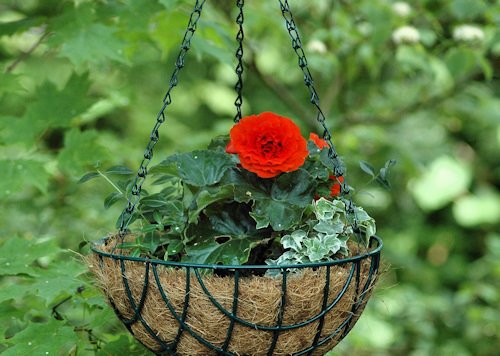
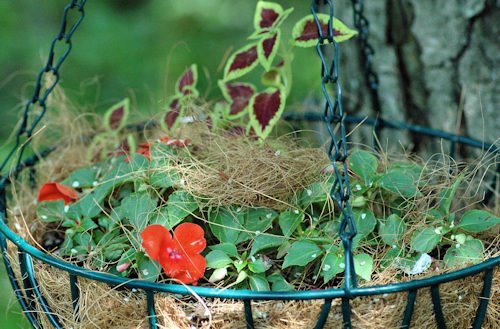
 This brings me to my final point for today – your recent choice of nesting materials. This is a hanging basket. Holding in the dirt and plants is a coconut fiber liner. Coconut fiber liners do not provide natural indigenous nest building materials because we live in NY, not Hawaii. We have no coconuts and I am pretty sure that Hawaii has no robins, so I don’t think that you have any sort of genetic predisposition to making nests from coconut fiber basket liners.
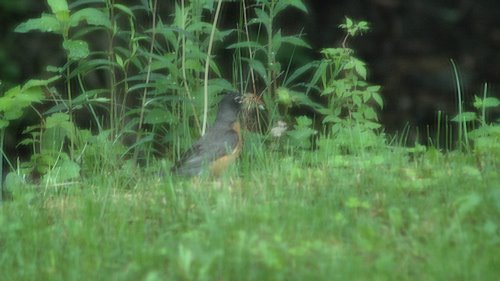
  And don’t try and blame this on the wrens or cardinals. You were caught by this surveillance photo, the poor quality of which can be attributed to the clandestine method in which this had to be taken and not on the fact that I had not changed the settings on my camera, making off with a wad of coconut fibers in your beak.
 This is the hanging basket after your depredations. With no coconut fibers to hold them in, the plants and dirt will fall out and that is not very desirable back yard decor for the summer.
 I trust that you will use this missive as a opportunity to mend your ways so that we can all coexist peacefully, and that no further discussions need take place. Thank you in advance for your attention to these matters.
Sincerely yours, dlyn

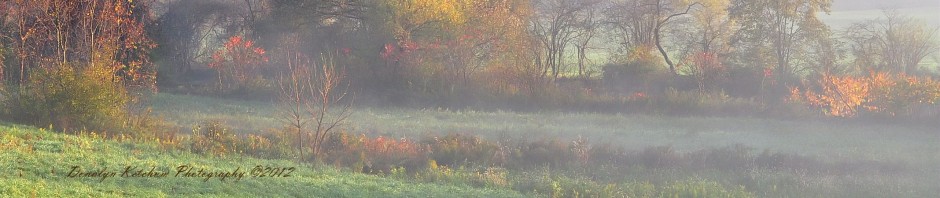
 I was sitting on my back porch and heard this dove almost directly over my head.
 My friend Judy gave me these Japanese Iris a few years ago – they are tough buggers to dig up and divide and of course we chose a blistering hot and humid day to try it. We are moving them as soon as they finish blooming, but this time, I will get Larry to dig them for me.
 This is one of my new favorite plants. It is a Ninebark “Summer Wine” and I can’t recommend it highly enough. It has beautiful marroon leaves, is engulfed in little white flower clusters for 2 weeks every June and makes a great backdrop for the daylilies that fill the bed where it lives.
 The sky as a storm was moving out one evening last week.


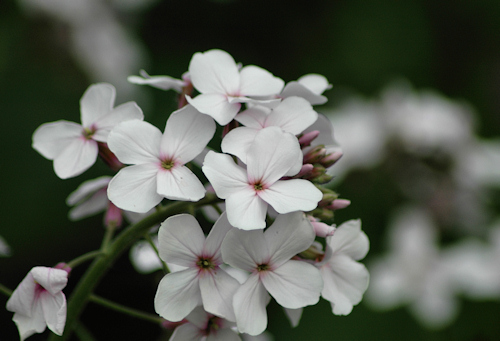
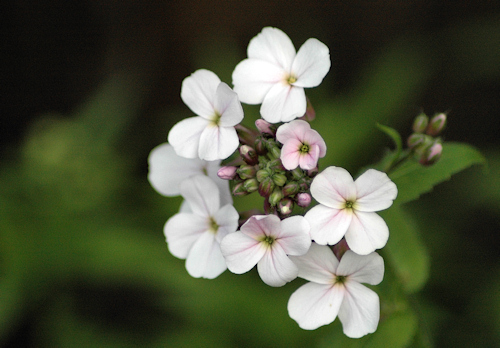
 And white
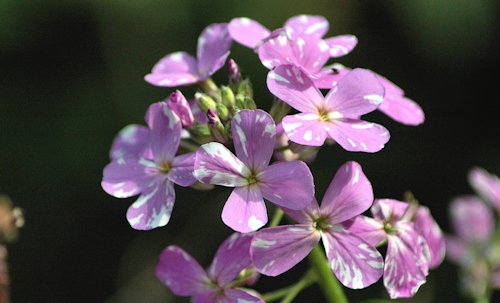
 All kinds of tie-dye patterns.
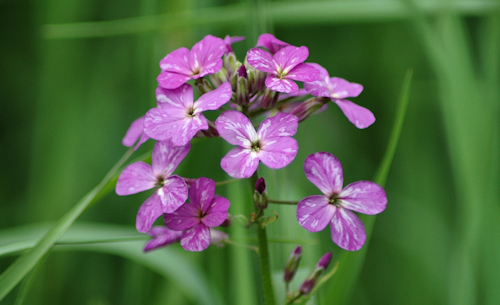 Ruffly petals.
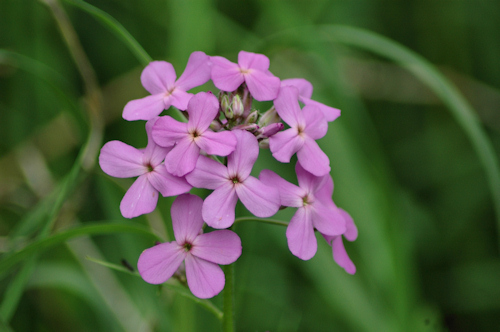
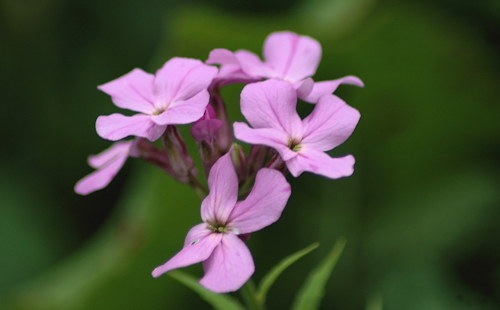 Little pink blooms
 And big splotchy ones
 I love them all.
 And I’m not the only one!